Last updated: November 15, 2020 By Jared Umphress
With a lot of time to think during quarantine there are three main lessons to learn from this pandemic in terms of climate change. 1) The urgency that we view climate change, 2) How climate change amplifies disease problems and 3) how climate change and the pandemic have disproportionately affected communities of color, and low income communities.
The Two Crisis’
Covid-19 is responsible for 1,308,975 global fatalities up to the date of this article. According to the World Health Organization, every year, an estimated 4.2 million people die prematurely from health complications caused by poor air quality. This shows that both are significant concerns to the world. However, due to being able to identify the more simple link between cause and effect, there has been a quicker and greater response to COVID-19. Also, since there is around three decades until we reach 1.5℃, many do not view the climate crisis with great urgency. However, there is great urgency to this problem.

(carbonbrief.org)
This graph shows that because we have to put off this issue, urgent and extreme actions must be taken to avoid the 1.5℃ threshold. In addition, reversing the temperature increase is harder than preventing it since carbon capture occurs at a sluggish rate compared to what us humans are emitting. We would need to start capturing more carbon than we emit.
One thing that is true for both the pandemic and the climate crisis is the agreement with science. Health experts, and scientists who are knowledgeable in their fields, give the explanations and guidance for the public. Scientists explain the scientific evidence for climate change. But many will follow their own first thoughts and what they hear, over the actual evidence.
Climate Changes’ affect on Disease
Destruction of ecosystems will increase the contact between humans and wildlife. It is not like meeting curious George, but instead could mean increased spread of disease because around 75% of new diseases introduced are zoonotic (animal transmitted), according to the CDC. It will also reduce the amount of biodiversity which means disease can spread through species at a higher rate. Biodiversity is also important to the pharmaceutical health field for between 25%-50% of pharmaceuticals come from natural genetic resources.
Mosquitoes, the highest disease transmitting vector will be given better conditions. Warming temperatures will increase the range in which it can survive and reproduce in. Also, the period of time when they are active will likely extend, the time they hibernate, shrink.
Racial Inequality
Another issue that communities of color/low-income communities face is poor air quality. Low-income, and communities of color are more likely to be exposed to air pollution due to housing discrimination and inequitable zoning. It is also financially and legally easier to have factories, utilities, or highways nearby low-income and communities of color. And while higher income/white communities consume more energy, they experience 17% less pollution than their lifestyle produces, whereas low-income communities experience around 56% more pollution than what their habits create. The increased exposure to air pollution synergizes with respiratory problems of Covid-19, creating a higher rate of mortality.
The Solution
The pandemic has lowered emissions in the first half of the year by 8.8% compared to the first half of last year. Although it may seem as a victory for the environment, this reduction is insufficient and we can easily execute a “V shaped” recovery to the same emissions. Also, I’m pretty sure many would not be fond of quarantine as a solution to climate change.
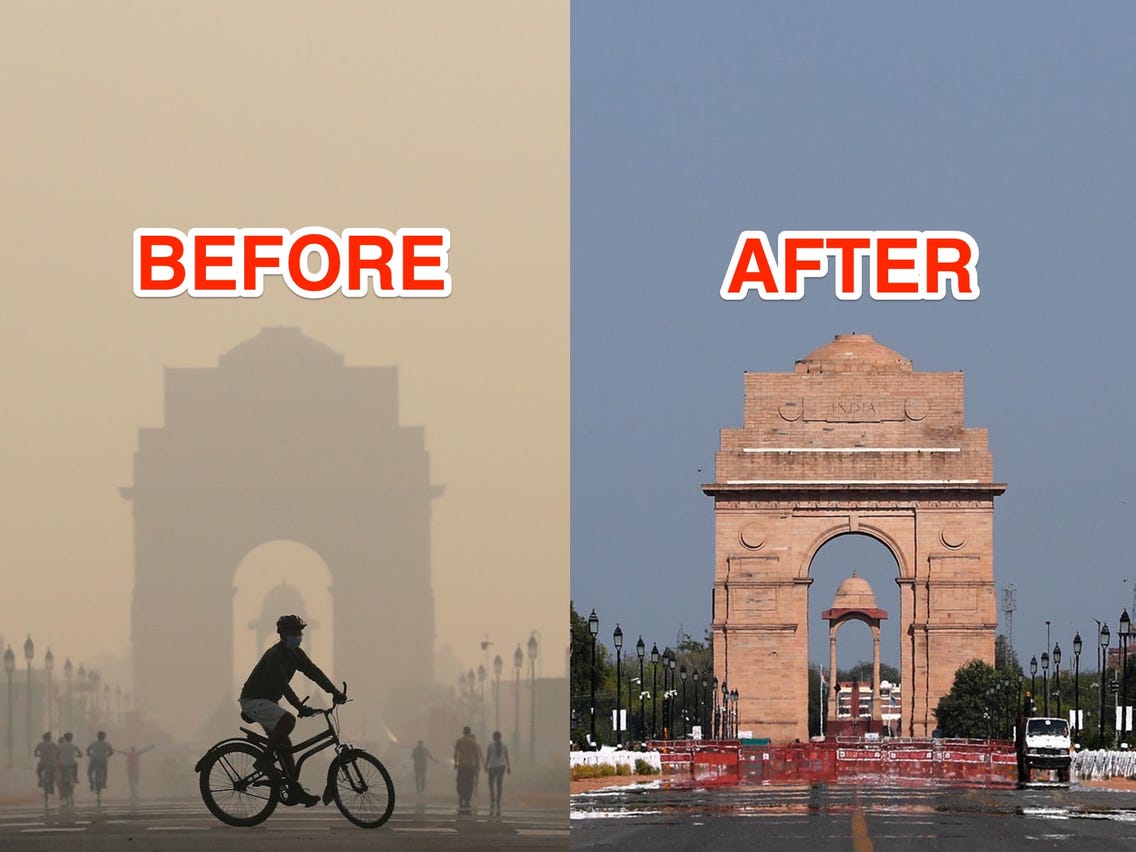
Many “memes” have been circulating around the internet such as this one:

(Buzzfeed)
While we could be the virus causing all this damage, we can be the cure! We could recover with an energy transition from fossil fuels, to renewable energies such as solar, wind, hydro, bio-digestion, geothermal and arguably nuclear. Land management practices such as restoring ecosystems, sustainable agriculture and placing carbon filter plants will conserve resources as well as sequester carbon dioxide.
In all, 2020 has been devastating due to the virus. Also, it has provided us with insight on how we view climate change, and its effect on disease. Finally, we have learned that the effects of COVID-19 and poor air quality affects low-income and communities of color the most.
Sources:
Climate Change Effect on Disease: https://www.cdc.gov/climateandhealth/effects/default.htm https://www.nationalgeographic.com/animals/invertebrates/group/mosquitoes/
Air Pollution and Inequality: https://www.who.int/teams/environment-climate-change-and-health/air-quality-and-health/ambient-air-pollution#:~:text=An%20estimated%204.2%20million%20premature,and%20disease%20from%20lung%20cancer https://www.lung.org/clean-air/outdoors/who-is-at-risk/disparities https://www.npr.org/2020/07/30/896635668/air-quality-disparities-persist-despite-overall-gains https://www.pnas.org/content/116/13/6001
Emissions lowered: https://www.nature.com/articles/s41467-020-18922-7
COVID 19 Dashboard: https://covid19.who.int/?gclid=Cj0KCQiAy579BRCPARIsAB6QoIbcpcZROK4br7RhPfXyc6fAcSNFEDtCqfXAtDCx8_Ony_gEjgcNbOUaApGZEALw_wcB
 The Eco Soldier
Thanks Jared,
I’m really enjoying reading these! Hope all is well!
Sincerely,
McC
LikeLiked by 1 person
I am glad you are enjoying the articles! I am hoping to post more articles this break with the ample amount of free time.
LikeLike
Interesting perspective on how Covid-19 has affected the human race, and how we in turn affect climate change- both scenarios requiring urgent attention. Was wondering why the 1.5C threshold is always used, why not 1.25 or 1.75C threshold?
LikeLiked by 1 person
COVID-19 and climate change: is the two different or are the same?
LikeLiked by 1 person
They are different but similar in how people rescted
LikeLike
A theory but not proven yet is that climate change caused Covid-19. It is really interesting. Please see my post:
https://sustain-blog.com/2021/03/03/climate-change-vs-covid-19-research-study-says-former-may-have-caused-latter/
LikeLike