
April 23, 2021 By Jared Umphress
Almost all the California Poppies I tried to grow this year have not progressed very well; leaving me feeling defeated. This could represent the disempowerment someone may feel in the face of climate change. However, on Earth Day, one of my California Poppies bloomed, showing me that in the rough of it, there is still hope.
A sign of hope came today when President Joe Biden has pledged to reduce US carbon emissions by 52% by 2050, a bold promise that would be effective if successful. In addition, his infrastructure includes adding electricity grids, and increasing electric car stations; both important to a green economy. But now on a more individual level, I will offer seven actions for you to take action beginning on Earth Day.
- Advocate for the change you wish to see
Inform yourself on environmental policy, and vote for the public officials you believe will bring about the most positive environmental change. For a larger scale change, this is the most effective.
2. Raise a plant native to your area

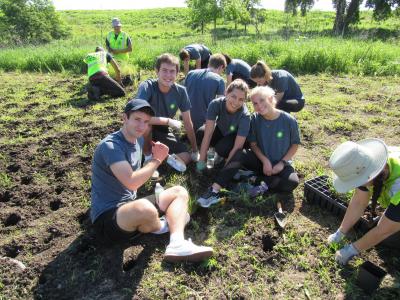
What better action to take around Earth Day then starting a native plant in your garden? Once established native plants only require natural rainfall, and attract beneficial wildlife to your area. Either volunteer to plant natives in your community, or add one to your home.
Common Yarrow is an easy California Native to add to your garden. Sun: Can grow anywhere from mostly shade, to full sun Soil: Standard Potting mix, or native soil Water: When there is no rainfall, water every 7-10 days. After two years you only have to worry about watering every month when there is no rain. Notes: Attracts ladybugs, bees, and butterflies
3. Reduce red meat consumption

This is one of the most effective ways to lower your contribution to climate change, water, land, and resource usage. Start out by eating beef only once per week, then once per month, until you eat it only on occasion. For those who like hamburgers, you can try the indistinguishable plant based burgers from Carls Jr, and Patch Burger.
4. Minimize your waste
Try and recycle and compost as much as possible. Composting involves turning food scraps, yard scraps, and napkins into usable soil. One idea is repurposing a plastic bottle into a plant pot. Electronics can be recycled at Goodwill. Hazardous waste such as chemical products can be dropped off at Yolo County Central Landfill Fridays and Saturdays 7:30 am to 3:30 pm.
5. Minimize your buying

Ask yourself, is this item I’m buying going to add value to my life? Instead of participating in mass consumption, buy less. For clothing, which contributes to 10% global emissions, consider buying thrifted clothes, or environmentally conscious brands such as fordays.com. After you’re done with the clothing, you can return it and they will recycle the material, while giving you a discount on your next purchase.
More on eco-friendly products: https://theecosoldier.com/2020/12/14/realtreeorfaketree/
6. Travel greener
Bike as much as possible, and when things return to normal, carpool. When it comes time to replace your car, consider a hybrid or electric vehicle which has produce far fewer greenhouse gases. When traveling by plane consider offsetting some of the damage by purchasing offsets on websites like https://marketplace.goldstandard.org/collections/projects
7. Conserve Energy
One of the most underrated green energies is to simply reduce the amount of energy you use. So, turn down the thermostat during winter months, and reduce AC usage during the summer; especially during peak hours. Another small resolution is to not leave the shower running, and turn off the water when scrubbing. If possible, switch the source of energy you purchase to renewable energies. For example, SMUD charges as little as $8 more to get your energy from 100% renewables. If you think it is an extra cost, it is the same cost as a couple of coffees a month.
Sources: https://www.nytimes.com/guides/year-of-living-better/how-to-reduce-your-carbon-footprint https://www.sciencemag.org/news/2017/07/best-way-reduce-your-carbon-footprint-one-government-isn-t-telling-you-about Images: https://foodspike.co.uk/vegans-questions-avoid/ https://www.illinoiscleanenergy.org/natural-areas-program/k-12-pollinator-schools-program https://environmentaldefence.ca/2020/12/24/will-2021-be-a-good-year-for-the-environment-here-are-our-predictions/
So let me know in the comments, what is one resolution that you will try to add to your life this upcoming year?


Good ways to live sustainably on Earth Day and beyond. Thank you 😊
LikeLiked by 1 person
Great, informative post. Thanks Jared!
LikeLiked by 1 person
Nice job Jared! I’m working on those native plants
LikeLiked by 1 person
Great ideas Jared. Actually, cld u send some specific native plant recommendations for the valley? Most shade w somw afternoon sun. Definitely low water use
LikeLiked by 1 person
All the plants listed are native to California, but may not be native to your specific area. All are drought-tolerant plants from the foothills or coast. I listed them in order of how much I suggest them, but all are great choices for part shade.
1. Coyote Mint
Three feet tall by three feet wide
Purple/lavender flowers in the summer
Has a pleasant mint fragrance and attracts a variety of pollinators
2. Hummingbird Sage
One foot tall as a groundcover, three feet tall when flowering. Produces new plants slowly spreading out.
Purple flowers in the spring.
Very effective at attracting hummingbirds, and other pollinators.
3. Mahonia ‘Compacta’
Up to two feet tall by five feet wide.
Yellow flowers in the spring followed by blue berries, hence giving it the common name Oregon Grape
A great garden variant that adapts to many conditions. Not the showiest flowers, but berries attract many birds.
4. Penstemon ‘Margarita BOP’
Two feet tall by two feet wide
Purple tubular flowers
Great at attracting bees and hummingbirds. Lower on the list due to not being a woody plant, which may make it less drought tolerant
Care:
Best plant now before we are too close to summer.
Plant them with a two to three-inch mound to help with drainageage. Native plants do not like sitting water around their base.
For the first year, when there is no rain, water every 7-10 days, with a hose on the lowest setting, for two hours. Infrequent, deep watering encourages the plant to form deep roots which makes them drought tolerant.
The second year, water every two weeks. During the summer, water once a month to keep them looking their best.
LikeLike
The thing with planting plants native to the valley is 1) they require full sun or 2) they are plants that have been grown near rivers, meaning they need moisture. Nevertheless, you can try these following plants.
1) Common Wooly Sunflower
Three feet tall by two feet wide
Small sunflowers starting in Spring and easing into summer
2) Bush Monkeyflower
Five feet tall by five feet wide
Tubular yellow flowers from Spring to Summer
3) Valley Sedge
Three feet tall by three feet wide but will spread wherever there is moisture
Nice meadow grass look
4) Blue Eyed Grass
One foot tall and will spread itself by seed but is not too invasive
Has many small blue flowers from January to July
Smaller plant that would look good around the border
LikeLike
Hey Jared,
I’m definitely going to decrease my red meat consumption. Probably not going to go Vegan, but Beyond Beef and Impossible Burgers might be my thing! 🙂
-Alex
LikeLiked by 1 person
Great to hear that you are transitioning to a positive alternative!
LikeLike
Hiya Jared!
It’s Carolyn from tennis camp. Your post was entertaining and informative, keep it up:) It’s unfortunate that even though there are many sustainable alternatives most countries don’t have access to them because either the process is too inefficient or isn’t compatible with their economy. Anyway, would you be interested in collabing with other bloggers? Maybe you already did that but if you want to work on something tgt let’s try to connect!
LikeLiked by 1 person
With an increased demand for sustainable products there should be a decrease in cost, but it definitely is still an issue and whole separate topic. We could definitely try collaborating! My email is theecosoldier@gmail.com
LikeLike